
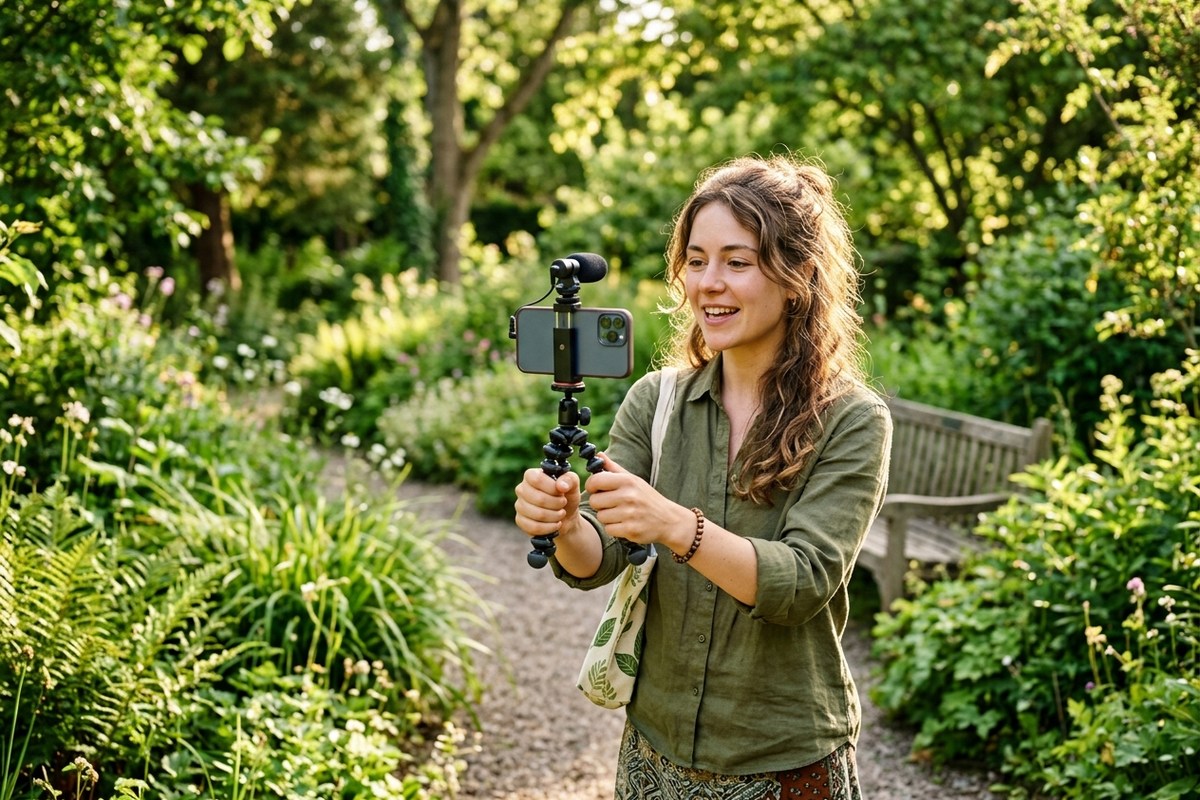
Ecology has become one of the most followed topics on social media. Climate activists, zero-waste enthusiasts, passionate permaculturists: committed influencers are numerous and diverse. Here is our selection of the 5 must-follow profiles, and everything you need to know to integrate ecological influence into your brand strategy.
Top 5 eco-influencers to follow in France
1 – Hugo Clément
Number of followers on Instagram: 2 Million
A renowned journalist and environmental activist, Hugo Clément is one of the most media-prominent faces of environmental commitment in France. Through his investigations, his posts on Instagram, and his documentaries broadcast on France Télévisions, he raises awareness among millions of people about climate issues, biodiversity protection, and the excesses of the agri-food industry. His strength: a discourse rooted in investigative journalism, credible and demanding, which contrasts with purely lifestyle content.
2 – Goran le permaculteur
Number of followers on Instagram: 1.1 Million
Number of followers on YouTube: 235k
Goran has built a loyal community around permaculture and food self-sufficiency. On YouTube and Instagram, he shares his daily life in the garden, his natural growing techniques, and his reflections on a simpler, more self-sufficient lifestyle. His practical, accessible approach, deeply consistent with his values, makes him a go-to influencer for anyone looking to take action rather than just stay informed.
3 – Pierre Rouvière
Number of followers on Instagram: 54.7k
A committed author and speaker, Pierre Rouvière explores the links between ecology, society, and alternative lifestyles. On his social media, he questions current consumption systems and offers practical ways to move towards a more responsible daily life. His educational and caring tone allows him to reach a diverse audience, from beginners to the fully convinced, without falling into the doom-mongering often associated with environmental discourse.
4 – Pierre Le Cultivateur
Number of followers on Instagram: 325.8k
Number of followers on YouTube: 45k
A farmer and content creator, Pierre Le Cultivateur embodies a positive and accessible vision of sustainable agriculture. On TikTok and YouTube, he shares behind-the-scenes looks at his farm, demystifies environmentally friendly farming practices, and popularizes complex topics with communicative energy. His profile is particularly valuable for brands wishing to position themselves on sustainable food, short supply chains, or food sovereignty themes.
5 – Thomas Martin & Noémie Jolly (@ecotalkfrance)
Eco Talk France is the account co-hosted by Thomas Martin and Noémie Jolly, dedicated to making ecology desirable and accessible to as many people as possible. They address environmental topics in a conversational and engaging format, mixing climate news, practical tips, and in-depth reflections. Their young and highly active community represents an ideal target for committed brands wishing to reach an audience that is aware and ready to take action.
What is an influencer in the field of ecology?
A green influencer is someone who uses their digital platforms to raise awareness among their audience about environmental issues: climate change, biodiversity, responsible consumption habits, zero waste… Unlike a traditional influencer focused on trends or entertainment, they position themselves as an awareness advocate capable of changing their community’s consumption behaviors. Their legitimacy relies above all on the consistency between their discourse and their actual lifestyle.
The different profiles of committed influencers
The ecosystem of committed influencers is rich and diverse. It includes climate activists with a strong political message, zero-waste enthusiasts sharing practical daily actions, defenders of biodiversity and endangered species, and promoters of slow living and voluntary simplicity. Each profile appeals to a different sensibility, and this diversity is an asset for brands wishing to target a specific audience rather than a general public.
Micro, macro, or nano influencer: what difference for ecology?
Nano-influencers (fewer than 10,000 followers) and micro-influencers (10,000 to 100,000) generally show much higher engagement rates than major celebrities. In the field of ecology, this proximity is a decisive asset: a small but genuinely committed community generates more real impact than a massive but passive audience. For a committed brand, collaborating with a consistent green micro-influencer is often more cost-effective and more credible than a partnership with a macro-influencer whose message is diluted.
Why collaborate with an ecology influencer for your brand?
Partnering with a genuinely committed influencer on environmental issues immediately strengthens a brand’s legitimacy on these topics. The transfer of trust between the influencer’s community and the partner brand is powerful: an engaged, demanding audience looking for consistency is also ready to make a responsible purchase when they trust the recommender. Brands that integrate an eco-responsible influence strategy differentiate themselves in the long term from their competitors, strengthen their brand image, build customer loyalty, and give a concrete dimension to their CSR approach.
How to identify the right ecology influencer for your strategy?
Before selecting an influencer, several criteria should be evaluated: the topics covered (related to your offering), the values displayed, the history of commercial collaborations, and the consistency of content over time. An influencer who changes positioning based on opportunities or multiplies contradictory partnerships is a red flag that should not be ignored.
Consistency between message and lifestyle
One of the most important criteria is the consistency between what the influencer promotes and how they actually live. A few positive signs to look for: a plant-based or local diet, travel by eco-friendly transport, and moderate consumption visible on their social media. Conversely, a “green” influencer who flies frequently or collaborates with fast fashion brands sends an inconsistent signal that can harm your credibility by association.
Analyzing community engagement and authenticity
The number of followers is not enough. What matters is the quality of engagement : interaction rates, the nature of comments (are they personal and detailed?), and the regularity of exchanges between the influencer and their community. Generic comments, abnormally rapid follower growth, or a significant gap between views and interactions are reliable indicators of a partially artificial audience.
Tools to find and evaluate an eco-influencer
Several resources can help identify relevant profiles: specialized platforms like Kolsquare or HypeAuditor, hashtag searches (#ecologie, #zerodechet, #permaculture, #slowliving), responsible influence agencies, or directories of committed creators. Regular monitoring on social media and in the specialized press also remains one of the most effective methods for spotting emerging profiles.
Setting up an effective ecological influence strategy
Defining your goals and message
Before launching a campaign, clarify your priorities: is it to build awareness for your committed brand, to educate your audience on a specific issue, to convert them to a responsible product, or to unite a community around your values? Your message must be authentic, in total consistency with your real commitments, and formulated in a way that is understandable for the influencer’s target audience.
Building a collaboration brief aligned with your values
A good brief for an ecological influence campaign leaves real freedom of tone to the influencer, respecting their editorial line and the way they usually speak to their community. It specifies the expected commitments (number of publications, formats, deadlines), the key messages to integrate, and clearly mentions the commercial nature of the partnership. The more transparent and respectful the brief, the more natural and credible the produced content will be.
Choosing the right content formats: video, stories, posts
- Long video (YouTube, documentary): ideal for raising deep awareness and addressing complex topics
- Reels / short TikTok videos : powerful for virality and discovering a new audience
- Stories : perfect for proximity, sharing daily life, and quick calls to action
- Static posts : effective for long-term visibility and social SEO
In the field of ecology, authentic and low-production formats often perform better than highly polished content.
Measuring the results of a responsible influence campaign
Classic KPIs remain relevant: reach, engagement rate, clicks, and conversions. But in the context of an ecological influence campaign, the qualitative impact is just as important: the nature of comments, spontaneous shares, and brand sentiment expressed by the community. A successful campaign is not measured solely by raw numbers, but also by the quality of the conversation it generates around your values.
This is, moreover, exactly what we do at Midnight, your influence agency in Lyon.
Avoiding greenwashing in your collaborations with influencers
Certain signs should raise red flags about the sincerity of an influencer claiming to be green: superficial discourse focused on the aesthetics of “green” without substance, a multiplication of contradictory commercial partnerships, a lifestyle incompatible with the displayed values, or an opportunistic recent shift in positioning. To ensure honest communication, make sure the promoted product is genuinely consistent with your brand’s overall ecological approach, clearly mention the sponsored nature of the content (#partenariat), and give the influencer freedom of criticism: a partnership where the influencer can qualify their opinion is always more credible than unconditional validation.