
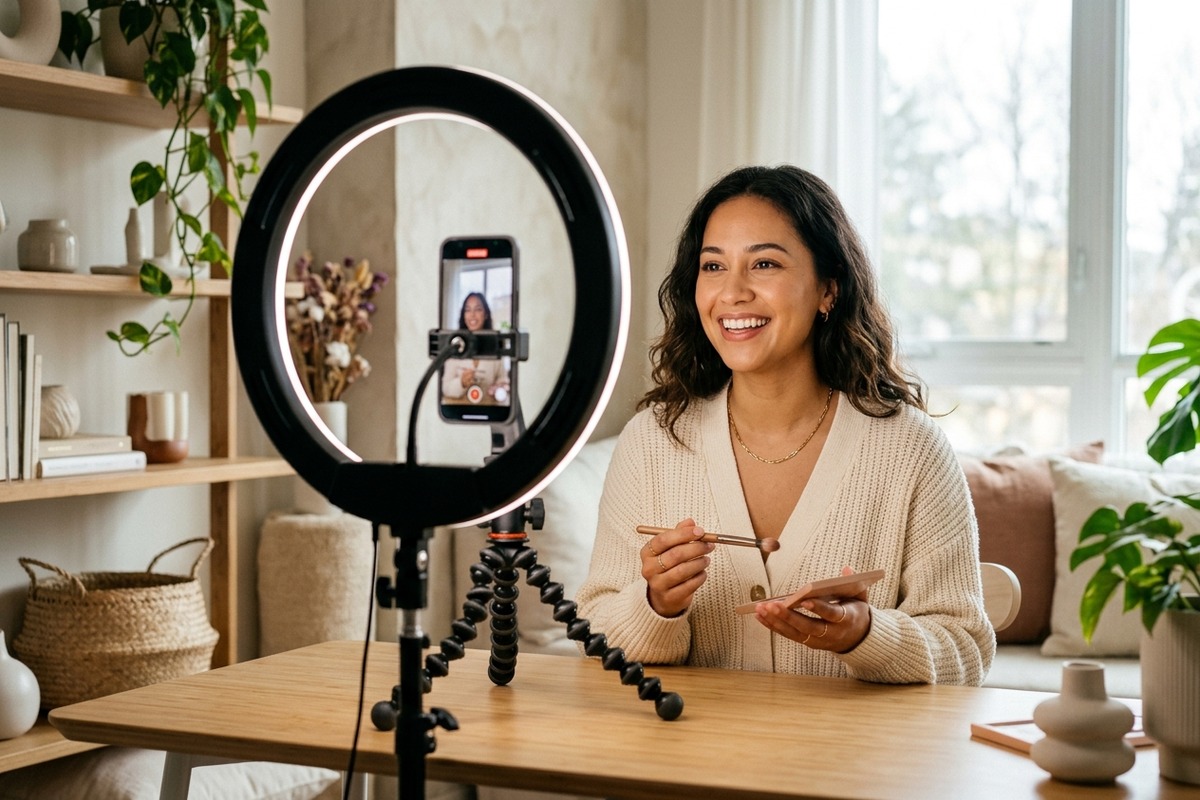
Influencer marketing has become one of the essential drivers of modern digital strategies. But in concrete terms, what is an influencer in marketing, how does this model work, and how can you make the most of it? We explain everything.
What you need to know about influencer marketing
Definition, types of influencers, strategy, platforms, and performance measurement: here are the key points to understand and master influencer marketing.
- A trusted advocate: the influencer acts as a credible intermediary between the brand and an engaged community, delivering far more authentic visibility than traditional advertising.
- Four influencer categories: nano (< 10,000 followers), micro (10,000 to 100,000), macro (100,000 to 1 million) and mega (1 million+) — each with its own advantages in terms of engagement and budget.
- Clear objectives first: brand awareness, lead generation, sales or engagement — your goals must be defined upfront to guide the selection of influencers, platforms and KPIs to track.
- Platform choice is a strategic decision: Instagram and TikTok for 15–35 year-olds, YouTube for long-lasting content, LinkedIn for B2B — each network serves different objectives and audiences.
- Measure to optimise: reach, engagement rate, conversion rate and ROI are the key metrics to monitor from the moment your campaign launches, using tools such as Kolsquare, HypeAuditor or Upfluence.
- Authenticity and legal compliance: allow the influencer creative freedom, always disclose the partnership (#partnership or #sponsored) and comply with the French law of 9 June 2023 governing commercial influence.
What is influencer marketing?
Influencer marketing refers to a collaboration between a brand and an individual with an engaged social media audience. The influencer acts as a trusted advocate: their community grants them a level of credibility that traditional advertising struggles to achieve. It is precisely this close relationship that makes it such a powerful lever for brands looking to reach their target audience in an authentic way.
How does influencer marketing work?
The mechanism is straightforward: the brand identifies an influencer whose audience matches its target, proposes a partnership, and the influencer creates sponsored content to promote a product or service. This partnership can take various forms: product placement integrated into a video, an exclusive promo code to share with their community, or co-created content such as a capsule collection or a series of articles. The key lies in the alignment between the brand’s identity and that of the influencer.
The benefits of influencer marketing for brands
Influencer marketing offers brands several major benefits:
- Greater brand awareness through visibility among qualified audiences
- Precise targeting based on the community’s niche and interests
- Enhanced credibility through recommendations from a trusted individual
- Higher engagement rates: influencer posts generate on average 3 to 5 times more engagement than traditional display advertising
According to several industry studies, 89% of marketers believe that the ROI of influencer marketing is comparable to or greater than that of other digital channels.
The different types of influencers
Influencers are distinguished by their number of followers, their area of expertise and the platforms they use — three criteria that directly impact the reach and cost of a campaign. To explore this topic further, check out our comprehensive guide on the different types of influencers.

By audience size
Follower count remains the primary classification criterion. It determines both the potential reach of a campaign and its budget.
Nano-influencers
With fewer than 10,000 followers, nano-influencers boast the highest engagement rates and maintain a very close relationship with their community. They are particularly well-suited for local brands or product launches that require a high degree of authenticity.
Micro-influencers
With between 10,000 and 100,000 followers, micro-influencers offer a strong balance between reach and engagement. Often specialised in a specific niche, they are cost-accessible while delivering genuine thematic expertise that brands value.
Macro-influencers
With between 100,000 and 1 million followers, macro-influencers generate high visibility and enable brands to build awareness at scale quickly. In return, partnerships with these profiles represent a significant investment, often starting at a minimum of four figures.
Mega-influencers and celebrities
With over 1 million followers, celebrities and mega-influencers deliver a massive impact on brand awareness. However, their engagement rates are often lower and the budgets required are very substantial, which typically makes them the preserve of large national or international campaigns.
By area of expertise
Influencers specialise in very specific niches: beauty, gaming, lifestyle, finance, sport, food, health, automotive… This thematic positioning is a major asset for brands, as it guarantees an already qualified and engaged audience. It is therefore essential to choose an influencer whose universe is consistent with your brand’s values and offering. Explore, for example, the profiles of health influencers, automotive influencers, or food influencers.
By platform
Each influencer is associated with one or more primary platforms: Instagram, TikTok, YouTube, LinkedIn, Twitch… The choice of platform should be guided by the habits of the brand’s target audience. A campaign aimed at 18-to-25-year-olds will not operate on the same playing field as a B2B strategy targeting corporate decision-makers.
How do you build an effective influencer marketing strategy?
Define your campaign objectives
Before launching a campaign, a brand must define clear, measurable objectives: increasing brand awareness, generating leads, boosting sales, or driving engagement around a product. These objectives directly determine the choice of influencers, the appropriate platforms, and the KPIs to track. Without clearly defined goals set from the outset, it becomes difficult to assess the true effectiveness of an influencer campaign.
Identify and select the right influencers
Choosing an influencer goes beyond follower count. The key criteria are alignment with brand values, engagement rate, audience quality and authenticity, and content consistency. Specialist platforms make this search easier by cross-referencing these various indicators. Check out our guide on how to find an influencer suited to your strategy.
Creating a creative brief for your influencers
A well-crafted creative brief is the cornerstone of a successful partnership. It should clearly convey the key messages, desired tone, legal requirements, and expected deliverables, without stifling the influencer’s creativity. An overly rigid brief produces artificial content that audiences detect immediately. The goal is to guide without constraining, so that the content remains natural and engaging.
Negotiating and structuring partnerships
Compensation models vary: flat fee, sales commission, gifted products, or affiliate arrangements. Whatever model is chosen, it is essential to formalise the partnership through a contract specifying content usage rights, publication deadlines, each party’s obligations, and payment terms. This framework protects both the brand and the influencer.
Key platforms for influencer marketing
Instagram and TikTok
Instagram and TikTok are the two essential platforms for influencer marketing, particularly effective for reaching the 15–35 age group. Instagram excels with its Reels and Stories, while TikTok dominates with its highly engaging short-form video format. The fashion, beauty, lifestyle, and food sectors achieve the strongest results on these platforms. To explore the best options available, check out our top 10 influencer platforms.
YouTube
YouTube remains the go-to platform for long-form content and in-depth reviews. Its key strength lies in content longevity: a well-optimised video can generate views and conversions for months, or even years, after it is published. This is a significant advantage over the short-lived content found on other platforms.
LinkedIn and B2B Platforms
LinkedIn is experiencing a significant rise in the world of B2B influencer marketing. Influencers active on the platform — often industry experts, executives, or consultants — bring credibility and authority within their fields, making them valuable partners for brands targeting professionals and decision-makers.
How to measure the performance of your influencer campaigns?
The essential KPIs to track
The key metrics to monitor are:
- Reach and impressions: how many people were exposed to the content
- Engagement rate: likes, comments, and shares relative to reach
- Conversion rate: clicks, sign-ups, and purchases generated
- Cost per acquisition (CPA) and return on investment (ROI)
The KPIs to prioritise depend directly on the objectives defined prior to the campaign.
Measurement and analytics tools
Several solutions enable you to effectively track your campaigns: Google Analytics for conversion tracking, native platform tools (Instagram Insights, TikTok Analytics), and specialist solutions such as Kolsquare, Upfluence, or HypeAuditor. It is essential to set up this tracking from the moment the campaign launches, in order to have reliable data and adjust the campaign in real time if needed.
Common mistakes to avoid in influencer marketing
Targeting the wrong influencers
Choosing an influencer based solely on their fame is one of the most common mistakes. A large follower count guarantees neither audience quality nor alignment with the brand’s universe. Fake followers and low engagement are red flags that must be monitored before entering into any partnership.
Neglecting content authenticity
Today’s audiences are highly sensitive to overly commercial or artificial content. A partnership that feels forced can damage both the brand’s image and the influencer’s reputation. It is therefore advisable to allow the influencer genuine creative freedom in order to produce content that feels natural, credible and engaging.
Overlooking legal and regulatory requirements
In France, the law of 9 June 2023 strictly governs commercial influencer practices. Any paid partnership must be clearly identified with the label #partenariat or #sponsorisé from the very beginning of the content. Across Europe, the Unfair Commercial Practices Directive also imposes transparency obligations. Failure to comply with these rules exposes both the brand and the influencer to penalties.
Influencer marketing trends
The rise of micro- and nano-influencers
Brands are increasingly turning to profiles with a smaller but highly engaged audience. The cost-to-effectiveness ratio is significantly more favourable than with mega-influencers, and perceived authenticity is far greater. This trend is expected to intensify in the coming years, particularly in niche sectors.
B2B influencer marketing on the rise
Influencer marketing is now expanding into professional sectors. On LinkedIn and through podcasts, industry experts influence the purchasing decisions of executives and professionals. This form of influence, more intellectual and less visual in nature, is particularly effective for companies targeting B2B decision-makers.
Artificial intelligence at the service of influencer marketing
AI is profoundly transforming influencer marketing practices: it makes it possible to identify the most relevant profiles, analyse audience quality in real time, and predict campaign performance before launch. Furthermore, the emergence of AI-generated virtual influencers is opening up new creative possibilities, still waiting to be explored by pioneering brands.